
It’s 2026. It is also the Year of the Horse.
Now, normally, I couldn’t be bothered about astrology. But something about the Year of the Horse is resonating with me right now. The idea of stronger communication, deeper connection, collaboration, travel, and exploration.
In other words: less autopilot, more presence. Less scrolling, more showing up.
Which feels… timely.
I’ve spoken about connection before (and yes, I’ll probably speak about it again). But this year, we’re seeing a cultural shift that feels impossible to ignore. There’s a collective longing to rebuild human connection. To step away from digital overload and back into shared experiences. There’s also, if we’re honest, a bit of a backlash against the AI digital overlords.
Last year was a hell of a year, and I’m hearing the same thing more and more: this cannot be it. This cannot be life.
So, people are looking for something simpler.
Not simplistic. Not kumbaya. Just simpler.
You can see it everywhere. Running clubs. Book clubs. People are choosing face-to-face again. Events where the phone isn’t the primary mode of connecting. Storytelling that’s real, not perfect.
It feels like a quiet rebellion against the noise. A return to feeling. A return to each other. This is also why events matter. We’ve always been wired for synchronicity. You feel it when a room laughs together, when a room goes quiet together, when something lands collectively.
This year, connection is our compass.
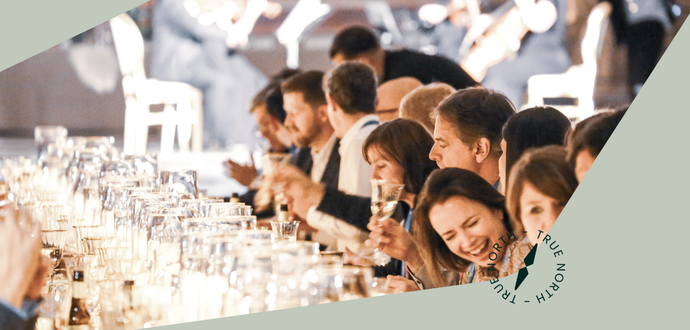
Connection within our team. Connection with our clients. Connection is woven through every experience we create.
And if we’re going to talk about connection properly, we need to talk about how it actually happens, not in theory, but in practice.
The three ways we truly connect.
1) Stories: Not “words”. Stories. Words are the vehicle, sure. But what actually connects people is story. The kind that pulls a thread through the room and makes people feel something. Empathy. Recognition. Relief. The laugh that rises from the stomach. Or that quiet moment when you realise how shared an experience really is — and that you’re not alone.
This is also why “presentations” are no longer sufficient. Information does not bond people. Stories do. Anyone can stand on a stage and tell you what they do. A great storyteller makes you care.
2) The small human signals: I am not talking about “body language” in a vague, LinkedIn way. I mean the real things you notice when you’re actually in a room with people. A smile across a table. A collective inhale before a big moment. Applause that starts with one person and ripples outward. The way the energy shifts when someone feels safe enough to speak honestly.
These tiny signals are how we sense belonging.
They say: “You’re not alone here.”
3) Shared experiences: This is the magic. The moment everyone laughs at the same time. The hush before the first note. The tear during a keynote. The joy of getting through something together.
Shared experiences do not just happen. They anchor us. They become memory, meaning, and belonging.
And this is where I think events have an even bigger job to do this year. We’ve become so interested in immersion and using technology to immerse people. Technology isn’t going anywhere. But the interesting challenge is: how do you become immersive in an analogue way? How do you use the platform to connect people, instead of connecting them to a screen? Sometimes the answer is straightforward.
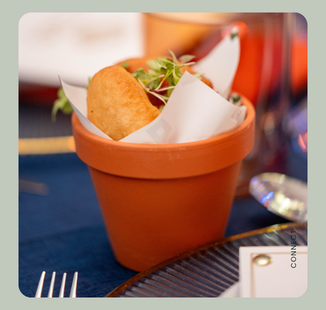
At the G20 kick-off dinner we hosted for ambassadors, we looked at the table and thought, “We’re not doing bread and butter.” We die of boredom.
We sat, researched and chatted with the food design team and we thought what can we do that makes this just more than bread and butter. So, we served amagwinya in small clay pots with chakalaka butter. That sounds small. It wasn’t.
People picked it up and immediately started talking. ‘What’s this?’ Oh no, I can tell you what this is. This is how we eat it. This is where it is from—Durban, curry, family, home. You aren’t boasting. You’re sharing a story. You’re being proudly South African. And suddenly, strangers are connecting over a tiny detail. Sometimes all it needs is a touch.
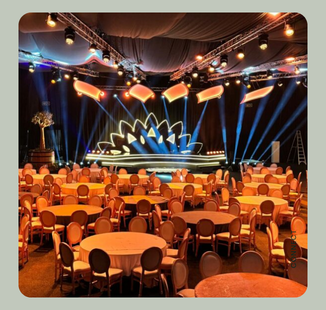
Benefits of being offline (without pretending we can be monks)
We can’t expect people to be off their phones and laptops all day. That’s not the space we work in. I’m not Gen Z joining a knitting circle for three hours on a boat. I would love to be. But no.
What we can do is craft moments where the phone is not the main character.
In our office, we hold a team lunch every six weeks. The rule is that for one hour, our cell phones are off, and the food must be shared.
That’s it.
No big performance. No corporate bonding exercise. Just humans in a room, passing plates, talking like humans.
Even when we are physically together, we often do not connect.
We have also reframed our one-on-ones. Less “what are you working on?” More “how are you?” Not in the shallow way. In the real way. You first establish a connection, and then the business conversation becomes freer and more honest.
The other thing I’m experimenting with personally is being less connected online and more connected to myself. The Brick is part of that (the app that really does switch you off from your phone and I can’t rave about it enough). So is walking without headphones. So is a dance list. Small things that pull you back into your own head and your own body, instead of living in everybody else’s content.
We’ve had a glow up
Over the past three years, we’ve grown—not just as a team, but in the spaces we operate and the experiences we create. Our clients trust us for our strategic depth and seamless execution, and now, our refreshed True North Agency brand mirrors the precision we bring to your content and the reliability in your logistics.
We’re creating a place to share our thoughts on the impact of events and build a community that feels inspired by the stories we tell and experiences we build. Visit our new website: tnagency.co
Here’s what I know.
Connection isn’t something we fix with better tools. It’s something we practise. It takes consistency. It takes intention. It takes courage to do events that don’t follow the norm, and it takes trust to let an agency hold the room with you.
Here’s to running toward connection with fewer reins and more rhythm.
Be Kind,

